

Dein Suchergebnis zum Thema: have

Rewriting Frogs’ Future with Science | Smithsonian’s National Zoo and Conservation Biology Institute

https://nationalzoo.si.edu/center-species-survival/news/rewriting-frogs-future-science

Stories about amphibians don’t always end with “happily ever after,” but scientists around the globe, including Brian Gratwicke at the Smithsonian Conservation Biology Institute, are working together to rewrite frogs’ fate.
The frogs that have co-evolved with this fungus are less likely to have severe impacts

    Kategorien:
  • International
Seite melden

#CheetahCubdate 3: Ready, Set, Play! | Smithsonian’s National Zoo and Conservation Biology Institute

https://nationalzoo.si.edu/animals/news/cheetahcubdate-3-ready-set-play

Amani’s two male cubs are one month old, ready to play and are back making appearances on the Cheetah Cub Cam! Read on to find out just how mobile these cubs are and don’t miss two adorable videos of them playing.
Lucky Cheetah Cub Cam viewers may have witnessed the cubs wrestling last week in

    Kategorien:
  • International
Seite melden

Top Five Reasons to Leap Into World Lemur Day | Smithsonian’s National Zoo and Conservation Biology Institute

https://nationalzoo.si.edu/animals/news/top-five-reasons-leap-world-lemur-day

We’re leaping for joy and celebrating World Lemur Day at Smithsonian’s National Zoo! This special holiday—which takes place the last Friday in October—is the perfect occasion for learning all about our lemur friends.
Unlike other primates, such as monkeys, apes and humans, prosimians usually have

    Kategorien:
  • International
Seite melden

Goings on With the Onagers | Smithsonian’s National Zoo and Conservation Biology Institute

https://nationalzoo.si.edu/center-species-survival/news/goings-onagers

Persian onagers are an amazing species! And even though they are not one of the iconic species that you may know, as someone who gets to care for them and spend time with them every day, let me tell you just how amazing they are.
If you want to understand why onagers are so cool, you have to understand where they

    Kategorien:
  • International
Seite melden

National Elephant Herpesvirus Laboratory | Smithsonian’s National Zoo and Conservation Biology Institute

https://nationalzoo.si.edu/animals/national-elephant-herpesvirus-laboratory

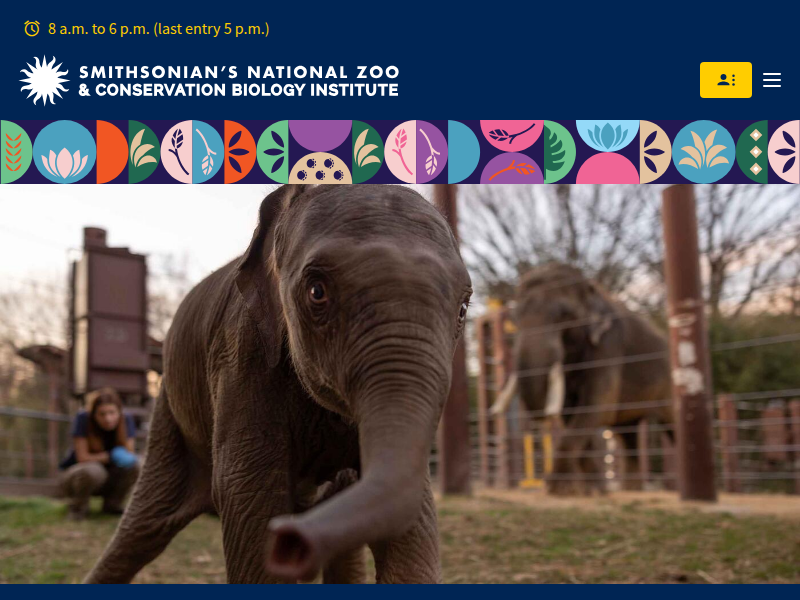
The Smithsonian’s National Zoo and Conservation Biology Institute is committed to preserving Asian and African elephants—both in human care and in the wild. As part of this mission, the Zoo researches diseases that afflict elephants, such as the elephant herpesvirus, known as elephant endotheliotropic herpesvirus (EEHV). Researchers at the Smithsonian’s National Zoo were the first to identify EEHV in 1995, following the death of our 16-month-old Asian elephant, Kumari, who was Shanthi’s first calf.
Since then, these researchers have made significant discoveries on the biology of

    Kategorien:
  • International
Seite melden

Southern lesser galago | Smithsonian’s National Zoo and Conservation Biology Institute

https://nationalzoo.si.edu/animals/southern-lesser-galago

Also called the Moholi bushbaby, southern lesser galagos are small, tree-dwelling members of the primate family that can be found throughout forested savannah areas of southern Africa. They rely on their huge eyes, strong hands and long tails to move quickly through the trees at nighttime.
They have large, gray ears and short snouts with a white strip between their eyes

    Kategorien:
  • International
Seite melden